 blog
Sustainable Alternatives to Single Use Plastic Wrap for Your Kitchen
Last Updated: November 29, 2026
Quick Summary
The best sustainable alternatives to single use plastic wrap are beeswax wraps, silicone lids and bags, glass containers, cloth bowl covers, and stainless steel or bento-style lunch boxes. Each replaces a sheet of cling wrap with something you wash and reuse, often for years. No single product covers every job, so match a durable tool to each task.
- Beeswax wrap suits bowls, cheese and cut fruit but must never go in the microwave or hot water.
- Leave roughly an inch of headspace in glass containers when freezing soups, stocks and sauces.
- Glass and stainless steel are recyclable in most curbside programs, while silicone rarely is.
- Beeswax and cloth wraps need cool hand washing and air drying, not a dishwasher.
- Buy one or two silicone bags first and test them on a real freeze-thaw cycle.
Table of Contents
- What are the best sustainable alternatives to single use plastic wrap?
- Beeswax wrap: a natural, reusable food cover
- Plastic wrap alternative for dough: cloth covers and silicone mats
- Alternative to plastic wrap for freezing: silicone bags and glass containers
- Plastic wrap alternative microwave: safe options for reheating
- Cost, care, and end-of-life: choosing durable kitchen swaps
- Frequently Asked Questions
What are the best sustainable alternatives to single use plastic wrap?
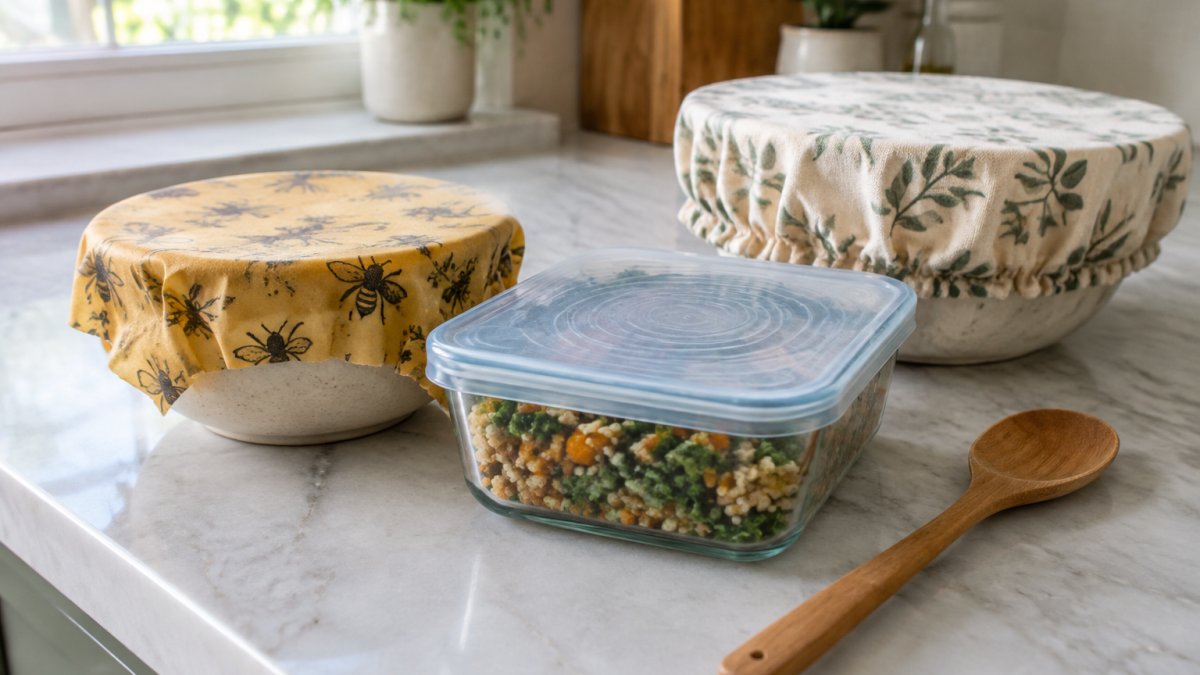
The best sustainable alternatives to single use plastic wrap are beeswax wraps, silicone lids and bags, glass containers, cloth bowl covers, and stainless steel or bento-style lunch boxes. Each one replaces a sheet of cling wrap with something you wash and use again, often for years.
The most useful way to choose is to start with the jobs cling film actually does, covering a bowl, wrapping a sandwich, freezing portions, reheating leftovers, then match a durable tool to each.
No single product replaces plastic wrap everywhere: wax wraps fail in the microwave, silicone bags are poor for wet dough, and glass is heavy in a lunch bag.
Below, we break down the realistic options, what each costs in care and money, and how to choose without wasting cash on gadgets you abandon in a month.
| Alternative | Best For | Reusable | Microwave Safe |
|---|---|---|---|
| Beeswax wrap | Bowls, cut produce, sandwiches | Yes, 6-12 months | No |
| Silicone lids | Bowls, cups, cut fruit | Yes, years | Yes, most |
| Glass containers | Leftovers, freezing, reheating | Yes, years | Yes |
| Cloth bowl covers | Dough, resting bowls | Yes, years | No |
| Silicone bags | Freezing, packed lunches | Yes, years | Yes, most |
| Bento boxes | Packed lunches, meal prep | Yes, years | Varies |
Beeswax wrap: a natural, reusable food cover
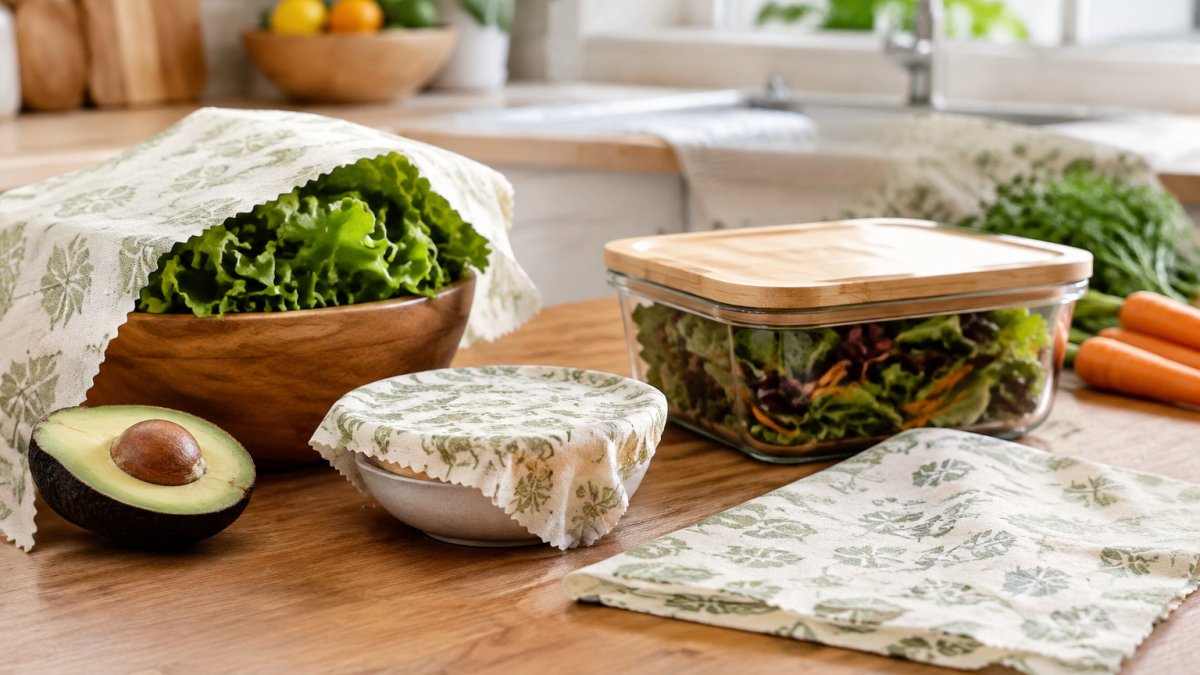
Beeswax wrap is a cotton cloth coated in beeswax, tree resin, and plant oils, and it works because your hands warm the wax so it moulds around a bowl rim or a half-cut avocado. The wrap holds that shape as it cools, creating a light seal.
It suits dry and semi-dry jobs: covering a bowl of salad, wrapping cheese, protecting a cut onion. It is a poor fit for raw meat, and it should never go near a microwave or hot water, because heat melts the coating.
Care is simple. Rinse in cool water with a little mild soap, air dry, and fold away. Avoid scrubbing with hot water or a rough sponge.
A common mistake is expecting wax wrap to last forever. The coating thins over time, so wraps eventually need replacing. Many brands make plant-based versions that can be composted at home; check the maker's instructions, since blends vary.
Best for: bowls, cheese, cut fruit, sandwiches. Skip if: you need a microwave cover or a seal for raw meat.
Plastic wrap alternative for dough: cloth covers and silicone mats
A plastic wrap alternative for dough needs to hold moisture in while dough rises without sticking to the surface. Cloth bowl covers and silicone mats both handle that job.
Cloth bowl covers are fabric discs, often with an elastic edge, that stretch over a mixing bowl. They let dough breathe slightly while trapping enough moisture for a proper rise. They are washable.
For rolling and shaping, a silicone pastry mat replaces the sheet of film some bakers lay down to stop dough sticking. Flour it lightly, roll, and wipe clean.
Watch out: fabric covers are not airtight, so a very long, cold ferment can dry the surface of the dough. For overnight fridge rises, a lidded glass or ceramic bowl is the safer choice.
Best for: bread and pastry rises, covering mixing bowls. Skip if: you need an airtight seal for a multi-day cold ferment.
Alternative to plastic wrap for freezing: silicone bags and glass containers
The best alternative to plastic wrap for freezing depends on what you are freezing. Glass containers suit liquids, sauces, and anything you want to thaw and reheat in the same vessel.
Glass containers: the food-safety and versatility pick.
Glass wins on food safety because it is non-porous. It does not absorb smells, stain from tomato or curry, or hold onto flavors the way silicone can over time.
The freezing rule that matters most is headspace. Water expands as it freezes, so leave roughly an inch of room at the top for soups, stocks, and sauces. Straight-sided containers freeze and stack more predictably than tapered ones.
Watch out: thermal shock can crack glass. Do not move a freezer-cold glass container straight into a hot oven or a sink of hot water.
Silicone bags: the space-saving pick.
Silicone bags suit freezing fruit, vegetables, and portioned meals, and they flatten to save space, which matters if your freezer is small.
The trade-off is odor and stain retention. Silicone is porous at the microscopic level, so strong foods like curry, garlic, or tomato can leave a lingering smell; a baking soda soak now and then keeps it fresh.
Watch out: not all silicone bags are equal. Thin bags split at the zip seam, and bags without a proper seal leak when thawing.
How to choose by job.
- Stock, sauces, and soups: glass containers with headspace, because they thaw and reheat in the same vessel.
- Fruit and vegetables: silicone bags, because they flatten and stack.
- Portioned meals: glass for anything saucy, silicone bags for anything dry or solid.
- Small freezer: silicone bags beat bulky containers on space.
- Long-term storage: glass, because it does not take on smells or stains.
A practical tip from our own kitchen habits: label and date everything, because frozen food in glass looks identical from the top.
Best for: batch cooking, portioned meals, stock, sauces. Skip if: you are short on freezer space, in which case flat silicone bags beat bulky containers.
Plastic wrap alternative microwave: safe options for reheating
The safest plastic wrap alternative microwave option is a glass container with a vented lid or a silicone lid left slightly open, because both let steam escape without melting onto your food. Cloth and beeswax wraps should never go in the microwave.
Here is the short list of what is safe to reheat with:
- Glass containers with a loose lid or a vented cover
- Silicone lids designed for microwave use, cracked open at one edge
- Silicone bags standing upright in a bowl, opened at the top
- A ceramic plate laid over a bowl as a simple cover
Avoid metal, avoid wax-coated fabric, and avoid sealing anything tight, since trapped steam builds pressure and can pop a lid.
The one limitation worth naming: silicone can pick up strong smells and stains from tomato or curry over time. A baking soda soak now and then keeps it fresh.
Best for: leftovers, reheating rice, soup, and stews. Skip if: you want a cover you can also use to wrap a sandwich for a lunch bag.
Cost, care, and end-of-life: choosing durable kitchen swaps
Durable kitchen swaps pay off over time, but only if you actually use them. A drawer of unused eco gadgets costs more than a roll of cling film ever will.
Cost over time: the break-even logic.
We will not quote a single break-even figure, because it depends on how often you cook, what you replace, and what you pay locally.
The items that survive are the ones that fit your most-used bowls and your washing routine.
Care effort: the real reason swaps fail.
If an item needs hand washing and drying every single day, it will end up at the back of the cupboard. Dishwasher-safe options get used more.
Watch out: hot water and rough sponges destroy beeswax wrap coating faster than anything else. Cool water and mild soap are the whole routine.
End of life: choose materials you can actually dispose of.
This is where reusable options are not equally sustainable. Glass and stainless steel are recyclable in most curbside programs. Silicone lasts for years but is rarely recyclable in curbside bins.
Check what your local waste service accepts before you buy, not after. A material you cannot responsibly dispose of in your area is a weaker choice than one you can.
A simple decision guide by use case.
- Covering bowls and leftovers: silicone lids or glass containers, because they are dishwasher-safe and fit daily use.
- Packing sandwiches: reusable sandwich wraps or bags, because they are portable and washable.
- Freezing portions: glass for liquids, silicone bags for solids and space-saving.
- Storing cut produce: glass containers or beeswax wrap for dry items.
- Reheating: glass with a vented lid or a silicone lid cracked open.
Accessibility and household constraints.
Not every swap suits every household. Beeswax wrap contains beeswax, so it is not vegan; plant-based wax wraps are the alternative.
For readers auditing their whole kitchen, our plastic-free kitchen collection offers a curated selection of plastic-free kitchen goods.
One more point, in the spirit of honesty. Nobody swaps everything at once, and you do not need to. Medical supplies, some packaging, and certain products still arrive in plastic.
Frequently Asked Questions
Can beeswax wraps replace plastic wrap for food storage?
Beeswax wraps work well for covering bowls, wrapping sandwiches, and storing cut produce. They are not airtight, so they suit short-term storage in the fridge rather than long-term freezing. They cannot go in the microwave or dishwasher. For raw meat or wet foods, use glass containers instead.
What is a good alternative to plastic wrap for freezing food?
Silicone bags and glass containers are the best plastic wrap alternatives for freezing. Silicone bags are flexible and can move from freezer to microwave. Glass containers with lids are easy to label. Avoid beeswax wrap for freezing because it loses adhesiveness in cold temperatures. Always leave headspace for expansion.
Can you microwave food covered with a plastic wrap alternative?
Yes, but choose carefully. Glass containers with silicone lids, silicone bags, and ceramic plates used as covers are microwave-safe. Beeswax wrap should never go in the microwave because the wax melts. Cloth covers are not microwave-safe unless specifically labeled. Always vent lids to let steam escape and avoid direct contact with food.
Are reusable plastic wrap alternatives worth the upfront cost?
Over time, reusable options often cost less than buying plastic wrap repeatedly. Over time, reusable options can reduce how much single-use plastic you buy. For current pricing, see Purely Made Supply's website or request a quote, as pricing depends on the items you choose.
